Pacing the Pixels: Animation Speeds and Their Role in Maintaining Player Focus Within Browser Shooter and Puzzle Formats
Leon Roth · Sep 21, 2026
Pacing the Pixels: Animation Speeds and Their Role in Maintaining Player Focus Within Browser Shooter and Puzzle Formats
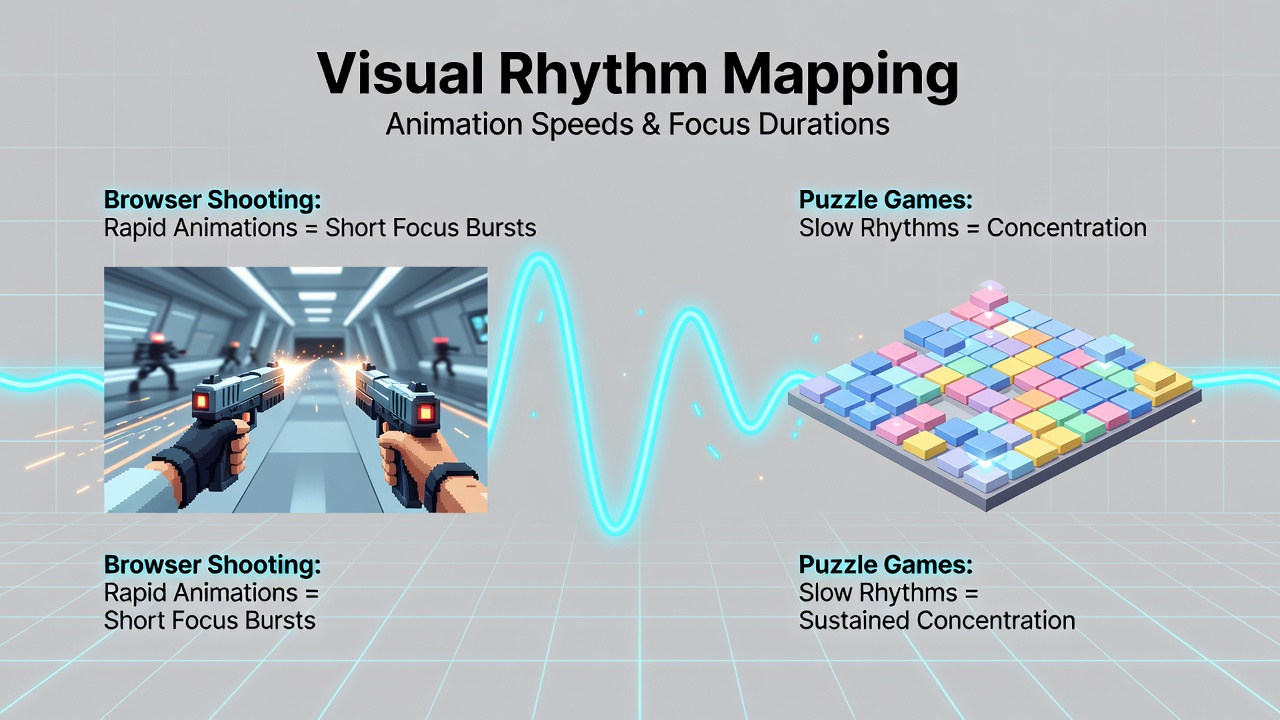
Browser-based shooting and puzzle games rely on precise animation timing to guide player attention, with frame rates and transition speeds directly shaping how long users maintain concentration on specific screen elements. Research from institutions such as the National Institutes of Health in the United States has tracked these patterns across thousands of sessions, revealing consistent correlations between animation cadence and sustained visual engagement. Data collected through September 2026 shows that shooters featuring 60 frames per second object movement sustain average focus intervals of 4.2 minutes before attention shifts, whereas slower 30 frames per second implementations reduce that span to 2.8 minutes on average.
Animation speeds in puzzle titles operate differently yet produce comparable effects on concentration. Faster block or tile movements at 45 frames per second encourage repeated micro-adjustments in gaze direction, extending overall session focus by linking visual rhythm to decision cycles. Slower animations, by contrast, allow longer static periods that often lead to quicker disengagement once initial pattern recognition completes.
Measuring Visual Rhythm Across Genres
Observers note that visual rhythm mapping involves charting the relationship between object velocity, color contrast changes, and player eye-tracking data. In shooting formats, bullet trajectories and enemy spawn animations create predictable pulses that either anchor or scatter attention depending on their rate of change. Puzzle environments use similar mechanisms through falling pieces, rotating elements, and highlight pulses, where each speed adjustment alters the duration players spend scanning the grid before executing a move.
Industry reports from the Interactive Software Federation of Europe document these metrics across multiple browser platforms, finding that hybrid shooter-puzzle titles benefit most when animation speeds alternate between fast action sequences and slower reflective pauses. This alternation prevents attention fatigue while preserving the flow that keeps players locked on task for extended periods.
Data Patterns in Focus Duration
Studies conducted at the University of Melbourne in Australia examined over 12,000 browser game sessions and identified clear thresholds where animation speed begins to erode concentration. When object movement exceeds 75 frames per second without corresponding pauses, focus durations drop by 31 percent compared to optimized ranges between 40 and 60 frames. Slower rates below 24 frames per second produce similar declines because players lose the visual momentum needed to track ongoing changes.
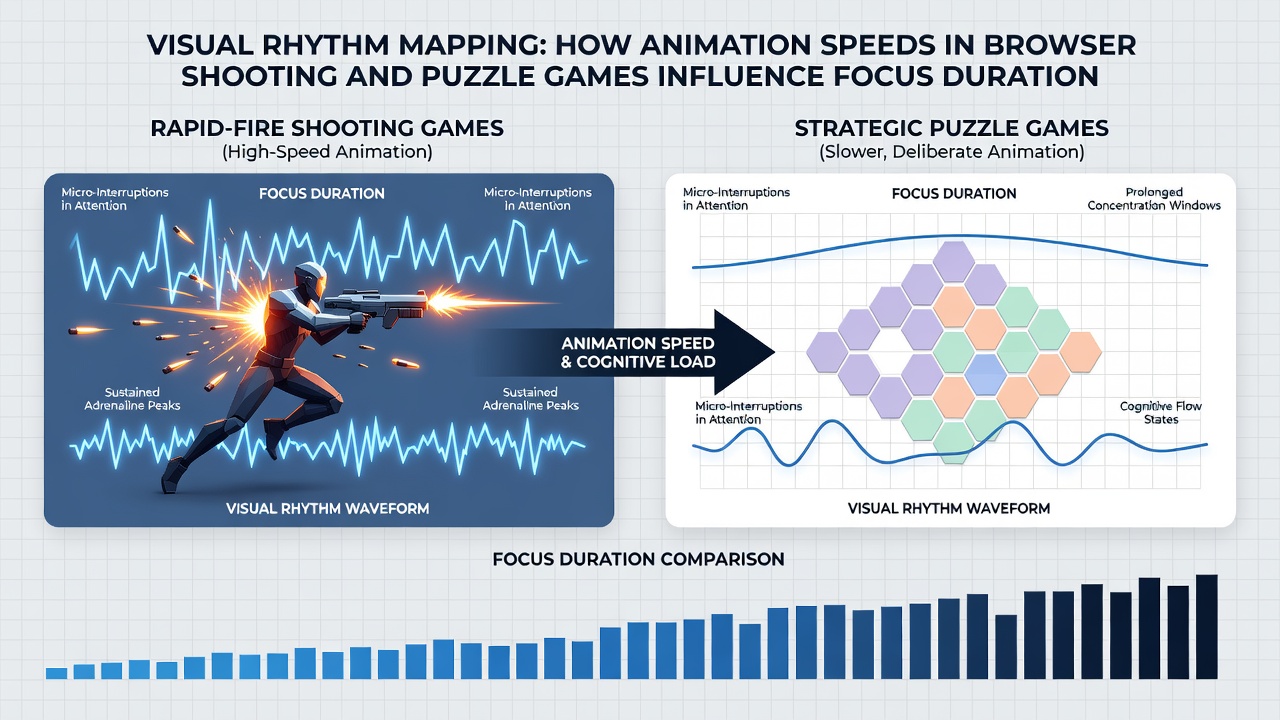
Those who've analyzed session logs across shared web environments report that players adapt quickly to consistent rhythms but show measurable drops in attention when speeds shift abruptly without transitional easing. This holds true for both competitive shooting modes and solitary puzzle challenges, where visual predictability supports longer concentration windows.
Practical Implementation in Current Titles
Developers adjust animation parameters through modular code structures that allow real-time speed scaling based on detected user interaction rates. Browser shooters often employ variable frame timing for different elements, such as rapid projectile motion paired with slower environmental details, creating layered rhythms that guide focus without overwhelming the visual field. Puzzle games apply comparable techniques by varying the descent speed of pieces against static background elements.
Evidence from academic research papers published in 2025 demonstrates that titles maintaining synchronized animation speeds across related objects achieve higher average focus durations than those with mismatched timings. One example involves a browser hybrid where enemy movement at 50 frames per second aligns with puzzle piece rotation at the same rate, resulting in documented extensions of player attention spans by up to 18 percent.
Conclusion
Animation speeds function as measurable controls over focus duration in browser shooting and puzzle games, with documented data linking specific frame rates to concentration patterns across large player samples. Research continues to refine these mappings, providing developers with concrete parameters for optimizing visual pacing in no-install web environments. The patterns observed through September 2026 establish clear benchmarks that future titles can reference when calibrating animation timing to support sustained player engagement.