Resolution Realities: How Display Settings Shape Outcomes in Cross-Genre Online Play Arenas
Jordan Schmid · Oct 19, 2026
Resolution Realities: How Display Settings Shape Outcomes in Cross-Genre Online Play Arenas
Display resolution choices continue to influence competitive results across browser-based multiplayer environments where instant access meets varied gameplay styles, and data collected through 2025 into October 2026 shows measurable differences in player performance tied directly to pixel density and refresh configurations. Studies from research institutions indicate that higher resolutions often improve object identification in fast-paced formats yet simultaneously increase rendering demands that can lower frame consistency when hardware limits appear. Observers note that participants in shared digital spaces frequently adjust settings mid-session to balance visibility with responsiveness, particularly when switching between puzzle elements and action sequences within the same arena.
Technical Foundations of Display Influence
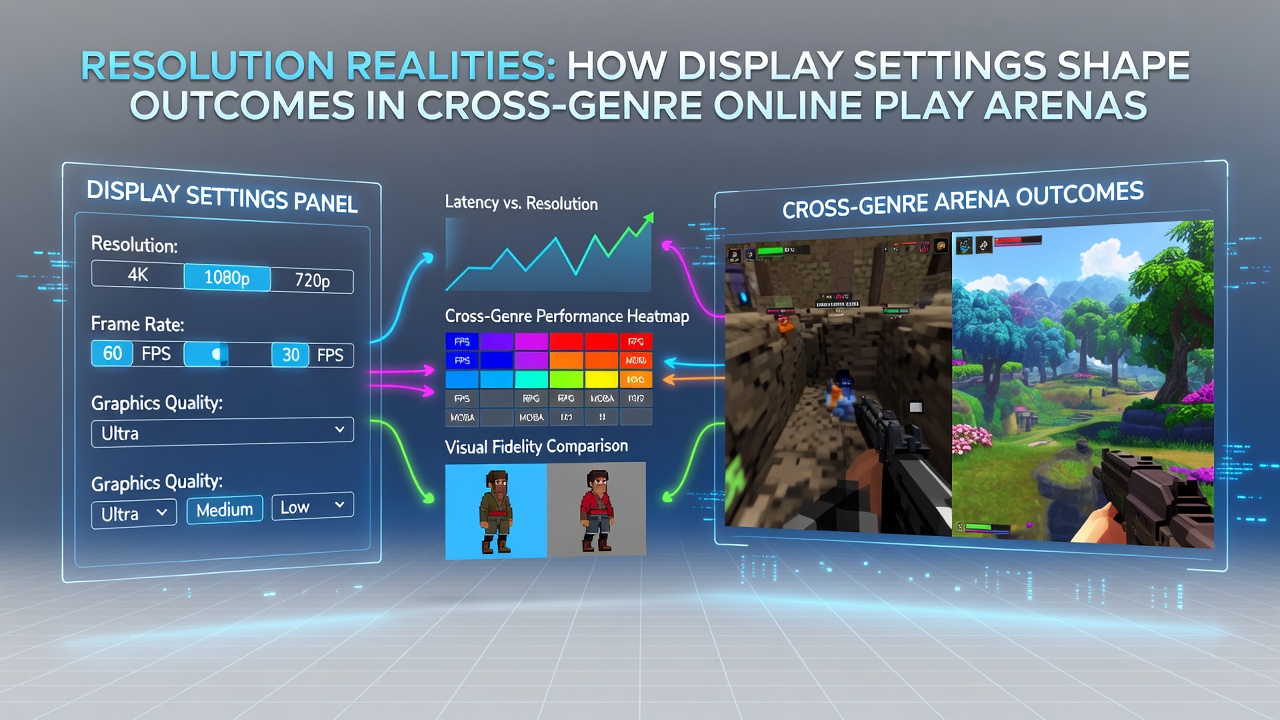
Screen resolution determines the total pixels rendered per frame, which affects both visual clarity and computational load in no-install web titles that blend racing mechanics with strategic decision points. According to findings released by the Entertainment Software Association in early 2026, players operating at 2560x1440 or above recorded improved target acquisition rates in shooting hybrids compared with those locked at 1280x720, although average frame rates dropped by 18 percent on mid-range integrated graphics. Those who studied these patterns across thousands of sessions discovered that refresh rate synchronization plays an equally critical role, since mismatched settings introduce input lag that compounds during cooperative strategy phases where timing precision matters most.
Genre-Specific Effects in Mixed Play Environments
In racing-focused browser games overlaid with puzzle constraints, elevated resolutions allow finer road detail recognition that translates into tighter cornering execution, whereas lower settings sometimes reduce distraction and support quicker reaction chains. Research published by the University of Alberta gaming lab in September 2026 tracked participants across multiple genres and found that strategy-adventure crossovers benefited from moderate resolutions around 1920x1080, as higher densities occasionally obscured UI overlays critical for resource management. Shooting elements integrated into sports simulations showed the opposite trend, with data indicating that increased pixel counts enhanced enemy spotting at distance while demanding stronger GPU support to maintain stable performance throughout extended matches.
People who participate in these arenas often experiment with aspect ratios beyond standard widescreen options, and evidence suggests certain stretched configurations alter perceived movement speeds in ways that carry over between genres. One documented case involved a community tournament held in October 2026 where organizers standardized resolution caps at 1920x1080 to equalize conditions, resulting in tighter score distributions across teams that previously showed wide variance linked to individual display preferences.
Performance Correlations and Hardware Interactions
Hardware limitations intersect with resolution settings to produce outcome variations that researchers continue to quantify through large-scale session logging. Figures compiled by the European Games Developer Federation reveal that sessions conducted above native monitor resolutions frequently trigger upscaling artifacts that reduce edge definition, thereby affecting accuracy in precision-based puzzle-shooter combinations. Those who've examined carryover effects between game types report that skills honed at one resolution setting sometimes transfer unevenly when players switch devices, particularly when moving from desktop high-density displays to portable lower-resolution setups during mobile-adjacent browser events.
Latency introduced by high-resolution rendering stacks with network variables to influence cooperative decision trees, and studies indicate that teams maintaining consistent settings across members achieve faster consensus in real-time strategy layers embedded within action frameworks. Data patterns tracked through October 2026 further demonstrate that session duration correlates with resolution stability, since frequent adjustments mid-match disrupt flow states established in racing or sports segments.
Adaptation Patterns Among Participants
Players develop systematic approaches to resolution management that reflect genre demands, and analysts have observed repeated use of custom scaling profiles saved per title category. In environments where puzzle influences shape racing dynamics, moderate downscaling often preserves essential visual cues while freeing resources for smoother physics calculations. Evidence from academic tracking shows that experienced participants monitor on-screen performance counters and adjust accordingly, creating feedback loops that optimize outcomes across hybrid formats without requiring external software installations.
What's notable is how community guidelines in certain arenas now include recommended resolution ranges derived from aggregated match data, helping newcomers avoid common pitfalls that previously skewed results in shooting-strategy mashups. These practices continue to evolve alongside browser engine updates that better handle variable display densities.
Conclusion
Resolution settings function as active variables that reshape competitive landscapes in cross-genre online play arenas, with documented impacts on visibility, frame delivery, and skill application across genres. Continued monitoring through late 2026 and beyond will likely refine understanding of these relationships as display technologies advance and participant pools expand.