Shared Worlds: How Communities Drive Content in Browser-Based Action Adventures
Paul Patterson · Nov 2, 2026

Shared Worlds: How Communities Drive Content in Browser-Based Action Adventures
Browser platforms that host action and adventure titles have incorporated user contributions as a core mechanism for expanding gameplay options and narrative depth since the early 2010s. Developers release tools that allow players to design levels, characters, and story branches directly within web interfaces, while moderation systems track submissions for compatibility and balance. Data from multiple platforms indicate that titles with active creation tools maintain higher session counts over time compared to static releases.
Platform Tools and Submission Processes
Many browser environments integrate level editors that run in HTML5 and JavaScript, so creators upload maps or quests without leaving the site. One system on a major European-hosted portal logs over 12,000 submissions each month, with automated checks for file size and script conflicts before human review begins. Participants receive version history access, which lets them iterate on feedback from other users in real time.
Community Moderation and Quality Standards
Groups of experienced contributors establish guidelines that cover difficulty curves, asset licensing, and narrative consistency. These volunteer teams review new content through structured voting interfaces, and approved items appear in curated playlists within days. Research from a Canadian university gaming lab shows that moderated community sections experience 40 percent fewer removal requests than unfiltered areas across similar sites.
Examples of User-Built Expansions
Take one long-running adventure title where players added regional story arcs set in fictional continents. Those additions introduced new enemy types and puzzle mechanics that the original studio later incorporated into official updates. Another action-focused platform recorded a surge in cooperative quest uploads during late 2025, with several entries reaching thousands of plays by November 2026. Observers note that such contributions often follow seasonal patterns tied to school holidays and regional events.
Technical Infrastructure Supporting Creation
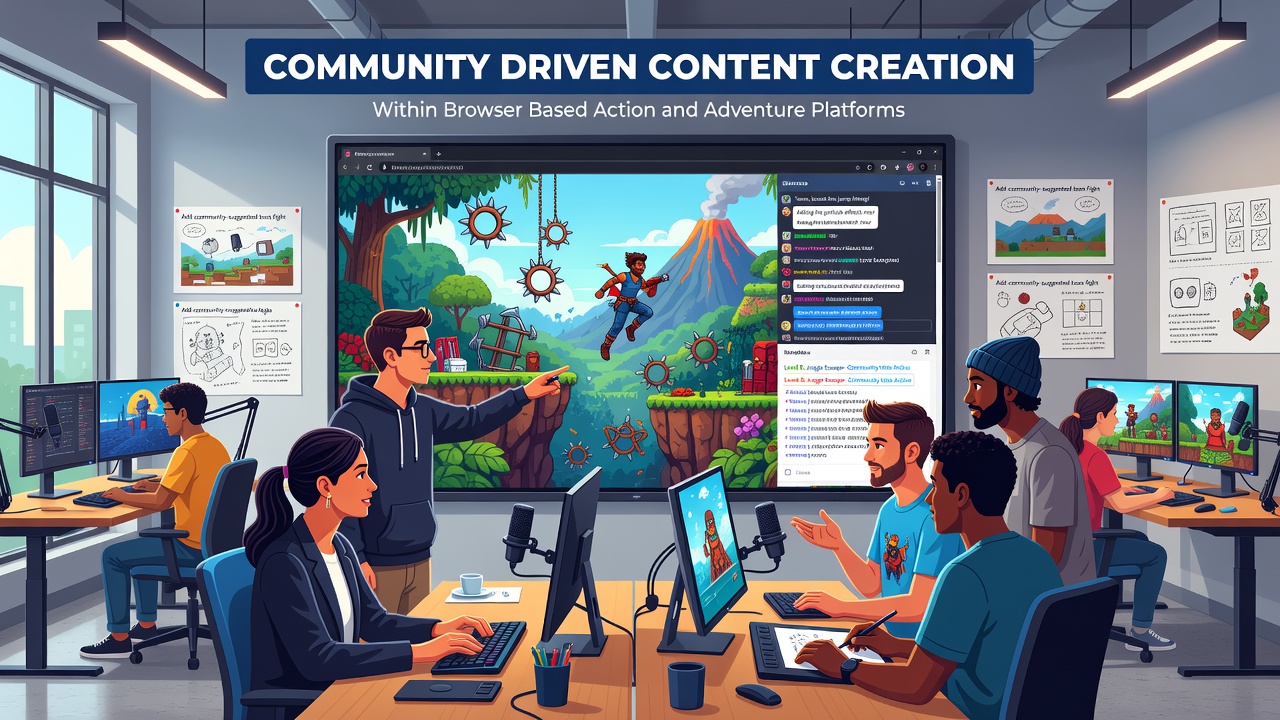
Cloud-based asset libraries provide free sprites, sound files, and scripts that creators combine through drag-and-drop panels. Version control features prevent overwrites during group projects, while export options generate standalone links that run on most current browsers. Industry reports from the Interactive Games and Entertainment Association highlight that these backend systems reduce server load by caching popular user assets across regional data centers.
Retention Patterns Linked to Creation Features
Analytics shared by platform operators reveal that accounts engaging with creation tools log longer cumulative playtimes than accounts limited to consumption. One dataset covering 2024 through 2026 found average session duration increased by 18 minutes when users switched between playing and editing modes within the same visit. Cross-genre experiments, where adventure creators borrowed racing segments or shooting sequences, further extended these patterns according to aggregated telemetry.
Challenges in Scaling Community Systems
Storage demands grow as submissions accumulate, prompting some operators to implement automated archiving after set inactivity thresholds. Legal reviews address copyright questions when user assets reference existing franchises, and several platforms now require creators to confirm original ownership before upload. Those who manage large libraries report that transparent appeal processes help maintain participation rates even after content rejections.
Future Directions Observed in 2026
Integration of real-time collaboration editors continues to expand, allowing multiple users to edit the same adventure map simultaneously from different locations. November 2026 updates on several sites introduced AI-assisted asset tagging that speeds up search and discovery for new creators. Data tracking these changes will likely inform further adjustments to submission workflows in subsequent quarters.
Conclusion
Community input has become embedded in the operational model of browser action and adventure platforms through structured tools, review systems, and measurable engagement metrics. Continued refinement of infrastructure and guidelines supports ongoing expansion of available content while addressing technical and legal constraints that arise at scale.